

Most people think 5S is about keeping a workspace tidy. It isn't. It's about making problems impossible to hide.
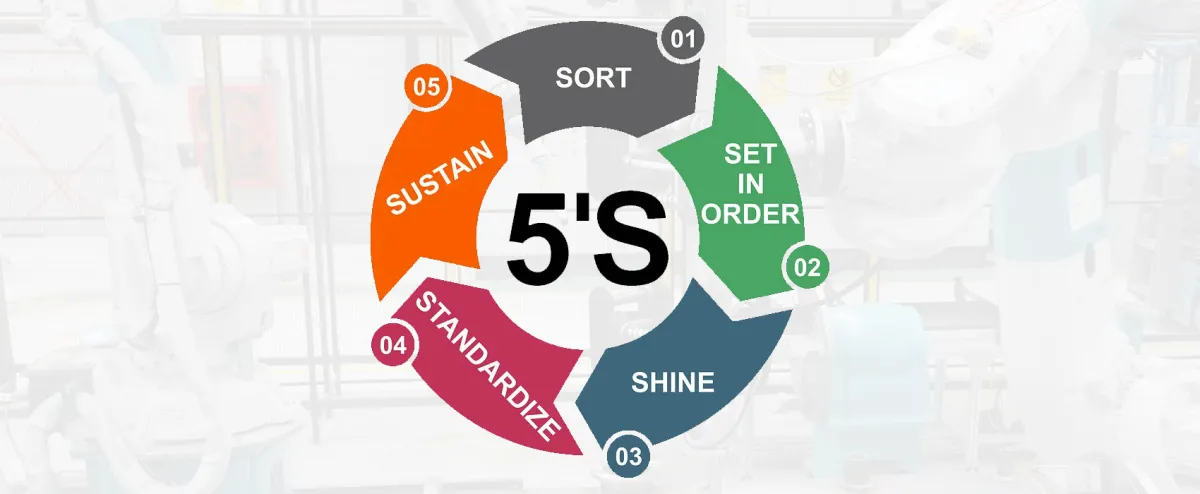
It's a lean method with five steps — but the real purpose of each is to surface trouble early, not to look organized:
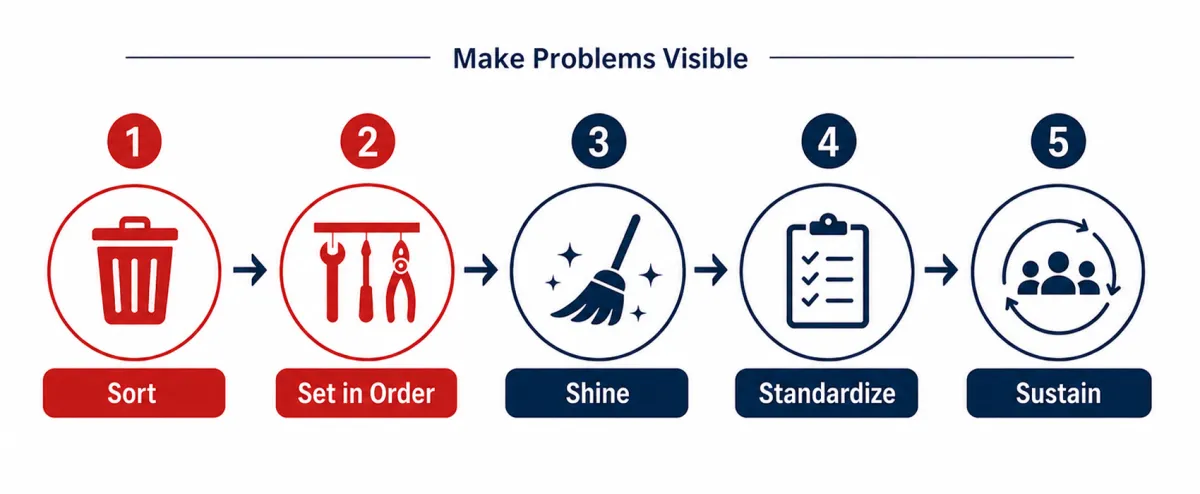
→ Sort remove what you don't need, so a leak or a missing part can't blend into the clutter.
→ Set in Order a fixed place for every tool, so a single glance tells you what's missing.
→ Shine cleaning is inspection in disguise; that's when you catch wear before it becomes failure.
→ Standardize so the standard doesn't depend on who's on shift.
→ Sustain the hardest step, and where most programs quietly die.
That last one is the whole game. Sorting a workbench takes an afternoon. Keeping it that way for three years takes leadership, audits, and a team that actually owns it.
The real test of 5S isn't how clean the floor looks on day one. It's whether an abnormality a tool out of place, a drip, a skipped step — becomes visible within seconds.
Where does 5S usually break down on your line: the rollout, or the discipline to sustain it?