


A PVT (photovoltaic-thermal) hybrid collector generates electricity and hot water from the same panel area: photovoltaic cells produce power while a heat exchanger behind them captures the waste heat. Because the cells are actively cooled, a PVT panel produces up to 15% more electricity than a comparable PV panel and delivers a combined efficiency of up to 80%.
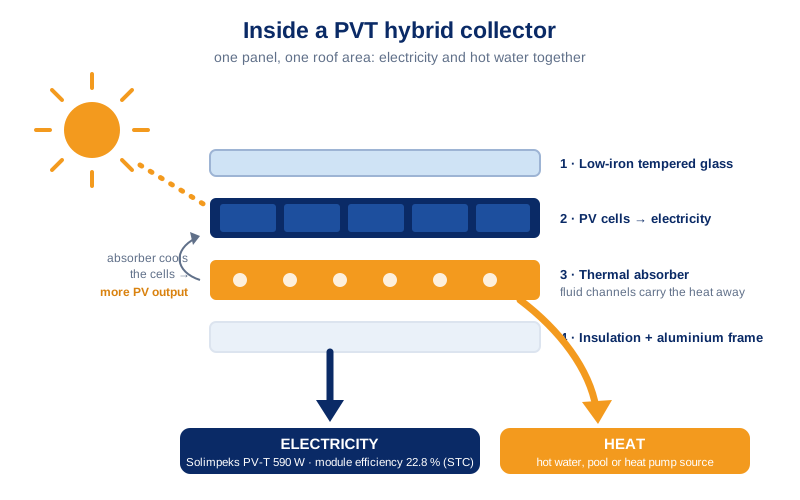
How does a PVT panel work?
A standard photovoltaic cell converts around 20% of sunlight into electricity — most of the rest becomes heat, which raises cell temperature and lowers output by roughly 0.4% per degree. A PVT collector bonds a fluid-carrying absorber to the back of the PV laminate. The circulating fluid pulls that heat away, cooling the cells and transferring the energy to a hot water cylinder or a heat pump source circuit.
One roof area therefore does two jobs: electricity generation and water pre-heating, with each function improving the other.
PVT vs separate PV and solar thermal panels
| Criterion | PVT hybrid | Separate PV + solar thermal |
|---|---|---|
| Roof area for equal output | Up to 40% less | More area needed |
| Electrical yield | +5–15% (cell cooling) | Standard PV yield |
| Combined efficiency | Up to ~80% | Depends on split |
| System complexity | One collector field, one mounting system | Two technologies, two mounts |
| Best fit | Limited roof area, DHW + power demand, heat pump source | Large roofs, single-purpose demand |
What temperatures does a PVT panel deliver?
Unglazed PVT collectors typically deliver 25–45 °C — ideal for pre-heating domestic hot water, swimming pools, or feeding the source side of a water-source heat pump. Glazed PVT designs reach domestic hot water temperatures of 60–70 °C at the cost of slightly higher cell temperatures. The PVT-plus-heat-pump combination is the fastest-growing configuration in Europe; funding schemes such as Germany's BEG explicitly recognise PVT as an eligible heat pump source.
Certification: how PVT panels are tested
PVT collectors are tested to the same standard as thermal collectors — ISO 9806 — and can carry the Solar Keymark, which most European subsidy schemes require. Electrical safety and performance follow the usual PV standards (IEC 61215 / 61730). Solimpeks' PV-T hybrid panels hold Solar Keymark certification (Kiwa Cermet Italia, licence 16918), and Solimpeks has produced PV-T collectors since 2008, making it one of the longest-standing PVT producers worldwide.
Frequently asked questions
Do PVT panels work in winter?
Yes. Electrical generation continues in any daylight, and the thermal circuit still harvests useful low-grade heat, especially as a heat pump source. Glycol-filled circuits protect against freezing; sizing determines how much winter yield is realistic.
Can PVT panels replace a solar water heater completely?
For pre-heating and low-temperature demand, often yes. Where high water temperatures are the priority and roof space is plentiful, a dedicated thermal collector still delivers more heat per square metre; many systems combine both.
How long do PVT panels last?
Design life matches quality PV modules: 25+ years, with the thermal absorber and connections built from the same materials as flat-plate collectors. Solimpeks has produced PV-T collectors since 2008.
Are PVT panels eligible for subsidies?
In several countries, yes. Germany's BEG funds Solar Keymark-certified PVT both as solar thermal and as a heat pump source; in France, stand-alone MaPrimeRénov' support for hybrid collectors ended in September 2026, but PVT used as a heat pump source can fall under the solar-assisted heat pump category. Requirements change yearly — check the current national rules.