

Bei Solimpeks wird die Emailqualität in jedem Schritt überprüft, vom rohen Emailschlicker bis zur gebrannten Beschichtung im Inneren jedes Speichers. Unser hauseigenes Labor prüft nasses Email auf Dichte, Partikelgröße und Fließverhalten, testet gebranntes Email auf Beständigkeit gegen Zitronensäure und kochendes Wasser, Schichtdicke, Haftung, Thermoschock und Eignung für Trinkwasser und überwacht das Spülwasser, mit dem der Stahl vorbereitet wird. Darüber hinaus durchläuft jeder Speicher und Kollektor eine Druckluft- und Wasserdruckprüfung: 100 %, nicht nur eine Stichprobe. In einem Solar-Warmwasserbereiter oder Speicher ist die Emaillierung die Schutzbarriere zwischen Wasser und Stahl, weshalb die Emailprüfung ein Fundament unserer Qualitätsarbeit ist.
Warum ist die Emailqualität bei einem Warmwasserspeicher wichtig?
Die Emailqualität entscheidet darüber, wie gut der Stahl eines Speichers über seine gesamte Betriebsdauer geschützt ist. Email ist eine Glas-Keramik-Schicht, die bei hoher Temperatur auf den Stahl aufgeschmolzen wird und eine harte, glasartige Oberfläche bildet, die Korrosion, Temperaturwechseln und chemischen Angriffen widersteht – genau den Belastungen, denen ein Warmwasserspeicher über Jahre des Erwärmens und Abkühlens ausgesetzt ist.
Die Beschichtung erfüllt mehrere Aufgaben zugleich. Sie trennt den Stahl vom Sauerstoff und von gelösten Salzen im Wasser. Ihre glatte Oberfläche widersteht Kalkablagerungen und Biofilmbildung und hält den Speicher sauber und effizient. Und in einem emaillierten Speicher oder Pufferspeicher schützt sie den Stahl im Dauerbetrieb bei sehr unterschiedlicher Wasserchemie, im Zusammenspiel mit der Magnesiumanode. Eine Beschichtung mit der richtigen Zusammensetzung, Dicke und Haftung gibt einem Speicher eine lange, störungsfreie Lebensdauer – und die einzige Möglichkeit, sich dieser Eigenschaften sicher zu sein, ist, sie zu messen.
Welche Rolle spielt das Labor in unserem Qualitätssystem?
Das Labor ist eine von vier Qualitätskontrollstufen bei Solimpeks: Wareneingangskontrolle, Kontrolle im Prozess, Endkontrolle und Laborkontrolle. Seine Arbeit umfasst drei Bereiche:
- chemische Rohstoffe und der Prozess der Oberflächenvorbereitung;
- Email-Rohstoffe und der Beschichtungsprozess;
- die thermischen Prozesse Trocknen und Brennen.
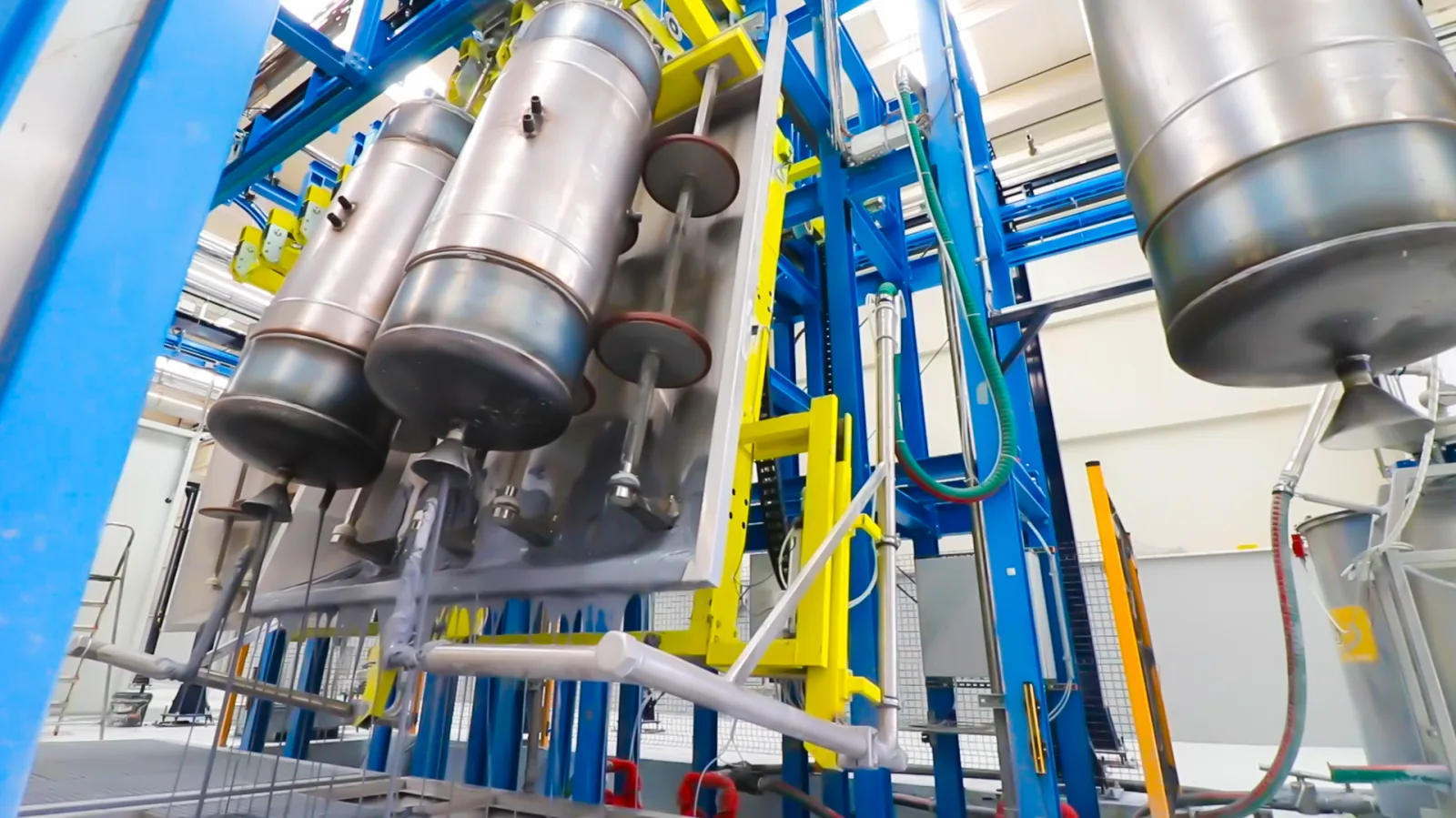
Unsere Speicher werden auf einer automatisierten Schweiß- und Emaillierlinie geschweißt und emailliert, und die Messungen des Labors sorgen dafür, dass die Produktion dieser Linie von Charge zu Charge gleichmäßig bleibt.
Welche Prüfungen führt unser Emaillabor durch?
| Phase | Prüfung | Norm / Methode | Was sie bestätigt | |---|---|---|---| | Prozesswasser | Leitfähigkeit, pH-Wert und Konzentration von Spül- und Waschanlagenwasser | Routinemäßige Prozessanalyse | Stahloberflächen werden vor dem Emaillieren korrekt gereinigt und gespült | | Nasses Email | Dichte | Routinemäßige Prozessanalyse | Der Schlicker hat den richtigen Feststoffgehalt für eine gleichmäßige Schicht | | Nasses Email | Partikelgröße („Bayer“-Test) | Routinemäßige Prozessanalyse | Das Email ist auf die richtige Feinheit vermahlen | | Nasses Email | Setzwert und Auslaufzeit | Routinemäßige Prozessanalyse | Der Schlicker fließt und setzt sich beim Auftragen gleichmäßig | | Gebranntes Email | Beständigkeit gegen Zitronensäure | TS EN ISO 28706-1 | Die Oberfläche widersteht Säureangriff | | Gebranntes Email | Beständigkeit gegen kochendes Wasser | TS EN ISO 28706-2 | Die Beschichtung hält langer Einwirkung von kochendem Wasser und Dampf stand | | Gebranntes Email | Schichtdicke | Schichtdickenmessung | Die Schicht liegt im festgelegten Dickenbereich | | Gebranntes Email | Schlagprüfung (Haftung auf Stahl) | TS EN 10209 | Das Email ist fest mit dem Stahluntergrund verbunden | | Gebranntes Email | Thermoschockbeständigkeit | Wiederholte Thermoschocks | Die Beschichtung bleibt bei plötzlichen Temperaturwechseln intakt | | Gebranntes Email | Hygienische Sicherheit (Migrationsanalyse) | DIN EN 12873-1 | Die Beschichtung ist für den Kontakt mit Trinkwasser geeignet | | Fertige Produkte | Druckluft- und Wasserdruckprüfungen | 100 % der Speicher und Kollektoren | Jede Einheit ist dicht, bevor sie das Werk verlässt |
Warum das Email vor dem Brennen prüfen?
Die Prüfung des nassen Emails erfasst Abweichungen in der Phase, in der sie am schnellsten zu korrigieren sind. Dichte, Feinheit und Fließverhalten des Schlickers entscheiden darüber, wie gleichmäßig er den Stahl bedeckt und wie sich die gebrannte Schicht bewähren wird; wir prüfen sie daher, bevor ein einziger Speicher beschichtet wird. Die Spülwasseranalysen leisten dasselbe für die Oberflächenvorbereitung: Richtig gereinigter und gespülter Stahl ist der Ausgangspunkt für gute Haftung.
Wie bilden die Prüfungen des gebrannten Emails reale Einsatzbedingungen ab?
Jede Prüfung des gebrannten Emails bildet eine Belastung nach, der der Speicher im Betrieb begegnet. Die Zitronensäure- und Kochwasserprüfungen setzen die Oberfläche chemischem Angriff und lang anhaltendem heißem Wasser aus. Die Schlagprüfung kontrolliert, dass das Email unter mechanischer Last am Stahl haften bleibt. Die Thermoschockprüfung ahmt plötzliche Temperaturschwankungen nach, etwa wenn kaltes Leitungswasser in einen heißen Speicher eintritt. Die Schichtdickenmessung bestätigt, dass jeder Bereich der Beschichtung innerhalb der Spezifikation liegt, und die Migrationsanalyse bestätigt, dass die Beschichtung im Kontakt mit Trinkwasser sicher ist. Die 100-%-Druckluft- und Wasserdruckprüfungen bestätigen dann die Dichtheit jedes fertigen Speichers und Kollektors.
Welche Produktnormen unterstützt diese Prüfung?
Die Arbeit des Labors unterstützt die Normen, nach denen unsere Produkte gebaut und geprüft werden: DIN EN 12897 für Warmwasserspeicher, DIN 4753-3 (UBA) für den wasserseitigen Emailschutz, EN 12976-1 und -2 für werkseitig hergestellte Solaranlagen sowie DIN EN 12975 und ISO 9806 für Solarkollektoren.
Wie treiben Labordaten die kontinuierliche Verbesserung voran?
Die Laborergebnisse fließen direkt in unsere Werkzeuge der kontinuierlichen Verbesserung ein. Wir arbeiten mit einem APQP-Ansatz aus der Praxis von IATF 16949, unterstützt durch FMEA, Messsystemanalyse (MSA), statistische Prozesslenkung (SPC), 8D-Problemlösung und Kaizen. Das Kundenfeedback schließt den Kreis: Jede Reklamation wird in unserem ERP-System erfasst, und die Ursachenanalyse wird dem Kunden spätestens innerhalb von 14 Tagen mitgeteilt.
Für uns ist die Botschaft einfach: Eine Emailbeschichtung ist nur so gut wie die Prüfung dahinter. Messbare, normgerechte Prüfungen in jeder Phase machen aus einer dünnen Keramikschicht dauerhaften Schutz für den Speicher und das Wasser darin.