

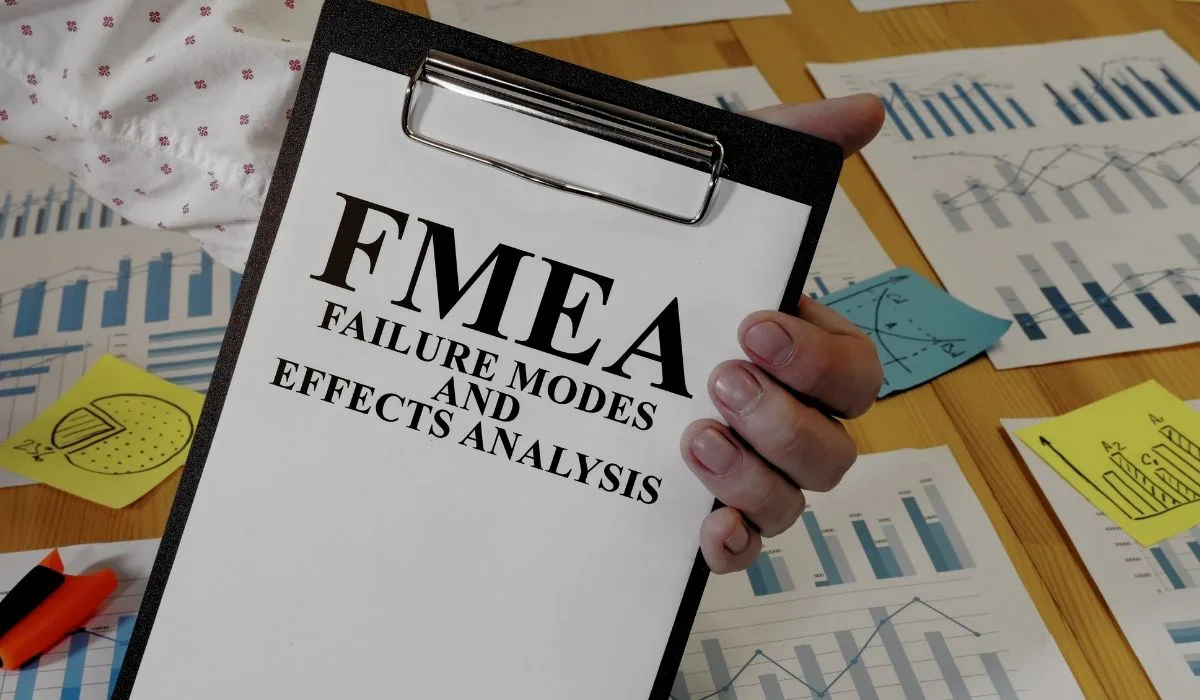
The foundation of high-quality manufacturing lies not only in flawless outcomes but also in a system that can anticipate and systematically manage potential risks. As renewable heating technologies advance, quality criteria now encompass not just operational efficiency but also long-term safety and sustainability of systems. At Solimpeks, we place FMEA (Failure Mode and Effects Analysis) at the core of our design and production processes to bring this vision to life. What is FMEA? FMEA is a risk assessment methodology designed to systematically identify potential failure points in a product or process and analyze their possible effects.
In renewable heating systems, a failure can have not just technical, but also economic and safety-related consequences. That’s why FMEA is an indispensable tool for ensuring system reliability.
Adopting FMEA helps project teams prioritize risks based on severity, occurrence, and detection ratings. This prioritization supports the proactive development of maintenance programs and design improvements, such as routine inspections for PVT systems to detect absorber surface degradation or the implementation of corrosion-resistant linings in thermal storage tanks.
Integrating FMEA into project planning also promotes compliance with industry standards and regulatory requirements, thereby increasing operational resilience and improving the investment appeal of renewable infrastructure. Embedding FMEA throughout the development and operational lifecycle mitigates both technical and financial risks, while instilling confidence among stakeholders, investors, and regulatory bodies as the renewable energy sector continues to grow and innovate.
"FMEA" (Failure Mode and Effects Analysis) “FMEA” (Failure Mode and Effects Analysis)
Key Concepts of FMEA Failure Modes: Refers to the various ways in which a system, component, or process might fail or malfunction. Effects: Represents the potential consequences or impacts these failures may have on the overall system or operation. Analysis: Involves a systematic evaluation based on the likelihood of occurrence, severity of the impact, and detectability of each failure mode. From RPN to AP: More Precise, More Preventive Solimpeks has adopted the Action Priority (AP) method, which aligns with modern quality systems, instead of the traditional Risk Priority Number (RPN) approach. In the RPN methodology, risks are calculated by multiplying Severity × Occurrence × Detection scores. However, this approach could sometimes overlook high-severity but low-occurrence failures.
In the updated system, each criterion — Severity (S), Occurrence (O), and Detection (D) — is classified as High (H), Medium (M), or Low (L). These classifications are evaluated using a standardized AP matrix, which determines the priority of action. With this method, even low-probability issues with high severity and poor detectability are no longer neglected.
This approach enables Solimpeks to move beyond reactive measures and establish a truly proactive quality assurance culture.

How Is the FMEA Process Structured at Solimpeks? Planning and Functional Decomposition: All functions of the product or process are systematically identified. Identification of Failure Modes: For each function, potential failure modes are listed by asking “what could go wrong?” Analysis of Effects and Causes: The impact of each failure mode and its root causes is evaluated. S–O–D Classification: Each failure mode is assigned a rating for Severity (S), Occurrence (O), and Detection (D) using H–M–L tags. Action Priority Determination: Combinations are assessed using the AP matrix to establish priority levels. Action Plans: Corrective or preventive actions are defined for high-priority risks, and responsible individuals are assigned. Monitoring and Updates: Implementations are regularly monitored, documentation is kept up-to-date, and improvements are made as needed. FMEA in Design and Production Stages Solimpeks utilizes both Design FMEA (DFMEA) and Process FMEA (PFMEA) to evaluate risks before production even begins. This allows us to identify and mitigate issues such as:
Enamel cracking in thermal storage tanks Leakage problems in collector systems Component incompatibility in heat pump circuits From Traditional to Modern AP (Action Priority) Approach The previously used Risk Priority Number (RPN) method could overlook rare yet critical failures. Solimpeks has adopted the new-generation Action Priority (AP) method to prioritize risks more accurately and proactively.
In this system, each potential failure is scored based on:
Severity Occurrence Detection Each criterion is rated as High, Medium, or Low, and assessed using an AP matrix. This ensures that even low-probability but high-impact risks are treated with the seriousness they deserve.
Hamza Seven introduces the quality unit.
FMEA as a Tool for Organizational Transformation At Solimpeks, FMEA is more than a technical documentation process. It is a management tool that strengthens interdepartmental integration, enhances transparency in decision-making, and fosters organizational awareness.
FMEA outputs are widely used across various domains, including:
Training: Programs ensure new employees are aware of failure-prone areas from the start. Procurement: Supplier development processes are shaped by PFMEA outcomes. Quality Control: FMEA data defines inspection frequency and methods for high-risk components. Compliance: Outputs align with ISO 9001 and IATF 16949 standards and are used directly in audits. Moreover, regularly updated FMEA documentation serves as corporate memory. When developing a new product, previous FMEA records guide teams and help avoid repeating past mistakes.
Forward Vision: A Digital FMEA Ecosystem One of Solimpeks’ near-term goals is to manage all FMEA data through a centralized digital platform. This digital transformation will offer:
Real-time data sharing across teams Version control and revision history tracking Instant monitoring of action plan progress Full transparency and traceability during ISO, CE, and IATF audits Through this digitalization, FMEA will not only continue to serve as the backbone of quality assurance but will also become a key pillar of Solimpeks’ broader digital transformation journey.
Real-World Benefits of FMEA Thanks to the FMEA method applied to Solimpeks’ products:
Damage caused by thermal expansion in solar collectors is prevented Corrosion risk in hot water tanks is minimized Compatibility of circuit components in hybrid systems is ensured This not only extends the system’s lifespan but also reduces maintenance costs.
At Solimpeks, FMEA is more than a technical documentation process.
Why Do We Work with FMEA? Renewable heating systems are exposed to various potential risks such as:
Seasonal temperature fluctuations Component fatigue and sealing failures Quality inconsistencies in installation or supply chain FMEA allows us to detect and address these issues before they arise, ensuring that we deliver more reliable, longer-lasting, and higher-performance systems to our customers.
The Digital FMEA Era Begins at Solimpeks! As part of our forward-looking quality vision, we are implementing a digital FMEA infrastructure, offering:
Real-time team collaboration Version tracking and audit history Compliance with ISO, CE, and IATF standards Digital action plan management With this transformation, FMEA becomes more than an analysis tool—it becomes the foundation of corporate memory and smart manufacturing.
Stronger and Safer Heating Systems with FMEA At Solimpeks, we view FMEA not just as a quality assurance tool, but as a strategy that guarantees customer satisfaction and product safety.
With our advanced engineering approach and digital solutions, your heating systems become more durable, efficient, and long-lasting.