


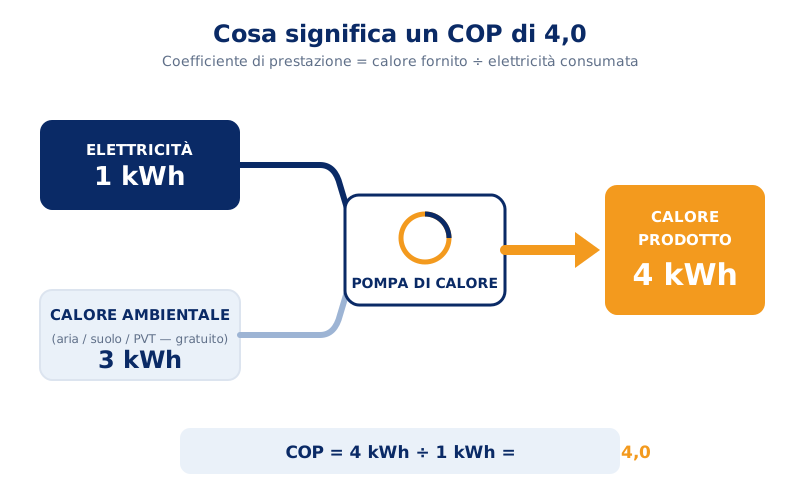
Il COP (coefficiente di prestazione) è il rapporto tra il calore utile fornito da una pompa di calore e l'energia elettrica che consuma in una singola condizione di prova fissa. Un COP di 4,0 significa che 1 kWh di elettricità produce 4 kWh di calore. Le moderne pompe di calore aria-acqua raggiungono tipicamente un COP compreso tra 3,0 e 5,0.
Come si calcola il COP?
Il COP si calcola dividendo la potenza termica resa per la potenza elettrica assorbita, entrambe misurate in kilowatt nelle condizioni di laboratorio definite dalla norma EN 14511. Una pompa di calore che eroga 8 kW di calore assorbendo 2 kW di elettricità funziona con un COP di 4,0.
La condizione di prova è sempre indicata accanto al valore. A7/W35 significa aria esterna a 7 °C e acqua in uscita a 35 °C: è il punto di riferimento standard per le pompe di calore aria-acqua. La stessa macchina provata a A2/W55 (aria più fredda, acqua più calda) mostrerà un COP molto più basso: per questo due schede tecniche possono essere confrontate solo nello stesso punto di prova.
Qual è un buon COP per una pompa di calore?
| Punto di prova | Tipica pompa di calore aria-acqua moderna | Interpretazione |
|---|---|---|
| A7/W35 | 4,0 – 5,0 | Punto di riferimento standard |
| A2/W35 | 3,2 – 4,2 | Prestazioni con clima freddo |
| A-7/W35 | 2,5 – 3,3 | Condizione di progetto nei climi freddi |
| A7/W55 | 2,8 – 3,5 | Radiatori ad alta temperatura / ACS |
Come regola pratica, ogni grado in meno nella temperatura di mandata migliora il rendimento di circa il 2–3%. Per questo le pompe di calore si abbinano così bene al riscaldamento a pavimento e ad accumuli inerziali correttamente dimensionati.
COP e SCOP: qual è la differenza?
Il COP è un'istantanea in una singola condizione; lo SCOP (coefficiente di prestazione stagionale) fa la media delle prestazioni su un'intera stagione di riscaldamento, usando il profilo climatico della norma EN 14825. Lo SCOP è il valore usato dalle etichette energetiche europee e dalla maggior parte dei programmi di incentivazione: per esempio, i finanziamenti BEG tedeschi richiedono che le pompe di calore raggiungano un'efficienza stagionale equivalente a uno SCOP ≥ 3,0. Per maggiori dettagli, vedere SCOP.
Perché il COP conta per i costi di esercizio
Con un COP di 4,0, il calore costa circa un quarto di quello prodotto con il riscaldamento elettrico diretto. Se a ciò si aggiunge un impianto PVT o fotovoltaico che fornisce una parte dell'elettricità, il costo effettivo per ogni kWh di calore scende ulteriormente: è questa la base della maggior parte dei progetti di impianti solare più pompa di calore.
Domande frequenti
Un COP può superare il massimo teorico?
No. Il limite teorico (limite di Carnot) dipende dalla differenza di temperatura tra la sorgente e l'utenza. Le pompe di calore reali raggiungono circa il 40–55% del limite di Carnot; un COP in scheda tecnica molto superiore a quello dei concorrenti nello stesso punto di prova merita scetticismo.
Il COP include la resistenza elettrica integrativa?
No. Il COP viene misurato sul circuito frigorifero in una condizione fissa. Gli indici stagionali come lo SCOP tengono conto dell'uso della resistenza integrativa nel corso della stagione, ed è uno dei motivi per cui lo SCOP è inferiore al COP del punto migliore.
Che COP raggiungono le pompe di calore Solimpeks?
Le pompe di calore aria-acqua Solimpeks raggiungono valori di COP fino a 4,92 a A7/W35 (serie Varm Up), mentre i modelli con compressore EVI funzionano fino a -30 °C. Le tabelle dei COP specifici per modello sono pubblicate nella pagina di ciascun prodotto.